What is Crypto Mining? Proof of Work Explained Simply
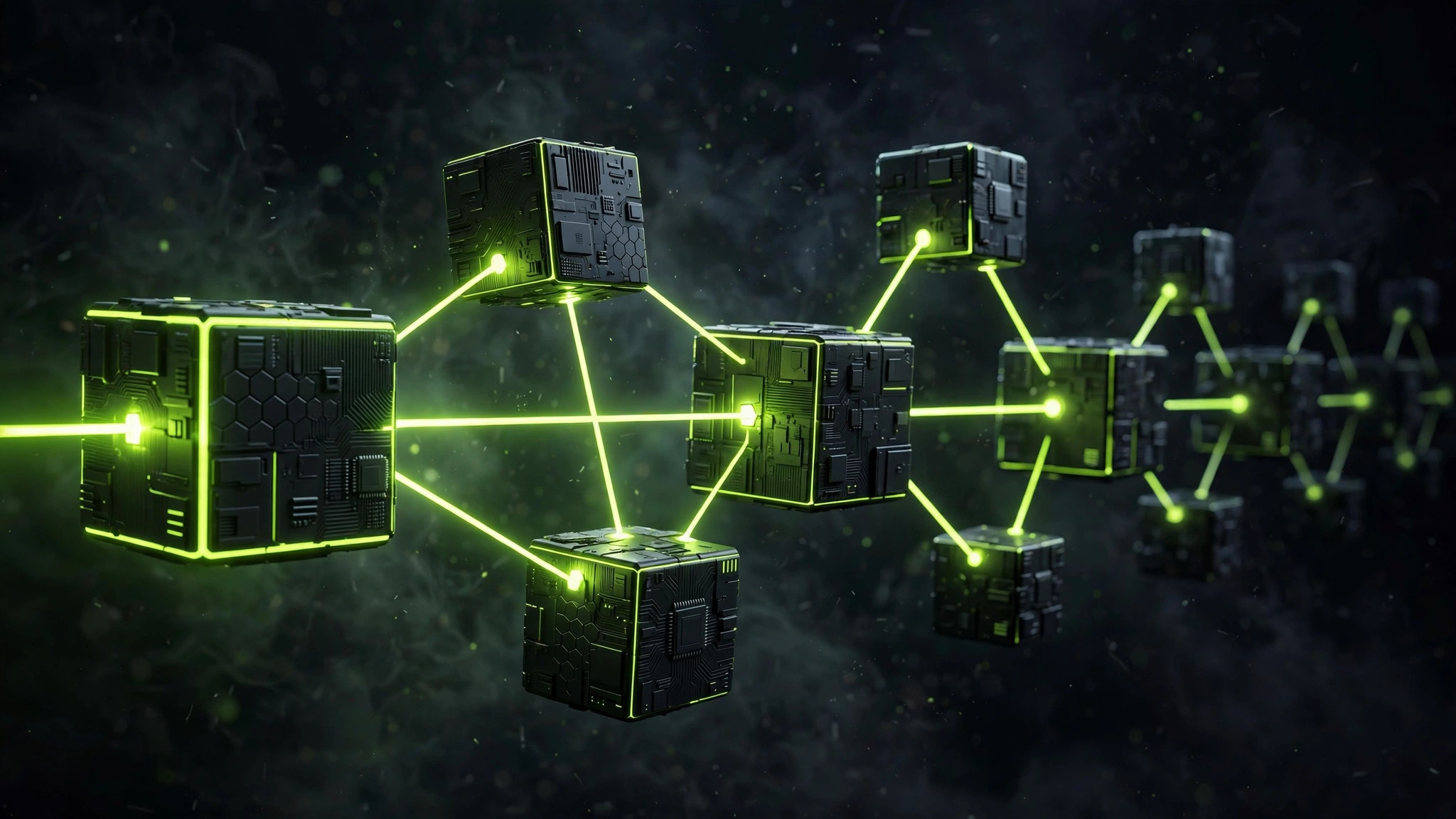
When people first hear "crypto mining," they picture underground tunnels, pickaxes, and gold. In the digital world, mining looks nothing like that. There are no shovels, no hard hats, and no rocks — just computers, electricity, and mathematics working together to keep a global financial network honest.
This guide explains what crypto mining actually is, how Proof of Work secures networks like Bitcoin, and why it matters — even if you never mine a single coin yourself.
> Educational content only. Nothing here is financial advice. Understanding how mining works is separate from any decision to participate in crypto markets.
Why Blockchains Need Miners
In traditional finance, a bank acts as the trusted middleman. When you send money to a friend, the bank checks your balance, updates its private records, and makes sure you cannot spend the same rupee twice. In digital money, this trickery has a name: double-spending — copying digital money and spending it more than once.
Cryptocurrencies like Bitcoin have no central bank. Instead, they run on a decentralised network of computers spread across the globe. Somebody still has to do the bank's job: collect transactions, verify them, and record them permanently.
That somebody is the miner. Crypto mining is the process computers use to:
- Collect recent transactions made by users.
- Group those transactions into a digital container called a block.
- Verify every transaction follows the network's rules.
- Permanently attach that block to the chain of previous blocks — hence, blockchain.
Proof of Work: The Puzzle That Protects Everything
Now the key question: with no boss in charge, how do thousands of strangers agree on which transactions are valid?
The answer is a system called Proof of Work (PoW). Imagine a teacher hands a room full of students a fiendishly hard puzzle. It cannot be solved with clever shortcuts — only by trying an enormous number of guesses, very quickly.
That is exactly what miners do. For every new block, their computers race to solve a cryptographic puzzle: they must find a specific number, called a nonce, that makes the block's fingerprint (a hash) start with a certain number of zeros. The process is pure trial and error — a machine might make trillions of guesses per second before finding the winning number.
The first miner to solve it earns the right to add the block, and every other computer on the network can instantly check the answer is correct. Hard to find, trivial to verify — that asymmetry is the genius of Proof of Work.
Why waste all that computing power?
Because the waste is the point. Cheating the network would require re-solving every puzzle from the block you want to change all the way to the present — while the rest of the world keeps adding new blocks. To pull that off, an attacker would need to control more than half of the entire network's computing power (a 51% attack), buying and powering mountains of hardware. The economics simply do not work: attacking costs more than the attacker could ever steal.
What Are Mining Rewards?
Running powerful hardware and consuming vast amounts of electricity is not free. So why would anyone bother? Because the protocol pays them.
Every time a miner wins the race and adds a block, they receive two income streams:
- Block reward: newly minted coins created by the network itself. This is why it is called "mining" — like digging fresh gold out of the ground.
- Transaction fees: small payments users attach to their transactions, collected by the miner who includes them in the block.
From Bedroom to Warehouse: How Mining Evolved
In Bitcoin's early days, anyone could mine on a standard home desktop. As more people joined, the puzzles got harder (the network automatically adjusts difficulty so blocks arrive at a steady pace), and the hardware race began:
| Era | Hardware | Who could mine |
|---|---|---|
| 2009–2010 | Regular CPUs | Anyone with a laptop |
| 2011–2013 | GPUs (graphics cards) | Hobbyists with gaming PCs |
| 2013–today | ASICs (single-purpose chips) | Professionals with warehouses |
Could you mine in India?
Honestly: it is a tough business. India's residential electricity rates (roughly ₹6–₹8 per unit, varying by state) make competing against industrial miners in regions with far cheaper power very difficult. An ASIC machine also costs serious money upfront, runs extremely hot and loud, and its profitability swings with coin prices and network difficulty. For most Indians, understanding mining is far more valuable than attempting it. This is educational information, not a recommendation for or against mining.
The Energy Debate, Briefly
Proof of Work's energy use is one of crypto's most debated topics. Two fair points to hold at once:
- The energy is not pointless. It is what makes the network secure without trusting any authority — the same way banks spend enormous energy on offices, servers, vaults, and armoured trucks to run the traditional system.
- It is still a lot of energy. Critics reasonably ask whether that cost is justified, which is one reason many newer blockchains chose Proof of Stake instead — a system that secures the network with locked-up coins rather than electricity.
Common Beginner Misconceptions
- "Miners create transactions." No — miners only verify and record transactions that users create.
- "Mining is hacking." No — it is an open, public competition governed by transparent rules anyone can inspect.
- "You need to mine to own crypto." No — most people simply buy crypto on an exchange; mining is just one way new coins enter circulation.
- "Proof of Work is the only system." No — Proof of Stake and other mechanisms secure many modern blockchains without any mining at all.
The Big Picture
Crypto mining is the digital engine that lets strangers trust a shared ledger without trusting each other. It replaces the bank middleman with mathematics, cryptography, and an open competition — and pays for its own security with newly minted coins.
Continue with our free beginner track to see how blocks, hashes, and wallets fit together into the full picture of how blockchain works.
> Educational content only. This is not financial advice.
Keep Learning
If you found this guide useful, these related guides will help you go deeper:
Frequently asked questions
Can I mine cryptocurrency on a laptop in India?
For major networks like Bitcoin, no — profitable mining now needs specialised ASIC hardware and very cheap electricity. Some smaller coins can technically be mined on a laptop, but profits rarely cover India's electricity costs. Learn the concepts first; mining as a hobby is usually a money-losing one.
Why does Bitcoin mining use so much electricity?
Proof of Work is deliberately energy-hungry. Thousands of machines worldwide compete to solve each block's puzzle, and that massive combined effort is exactly what makes the network too expensive to attack. The electricity is the cost of trustless security.
Do all cryptocurrencies need mining?
No. Mining is only required on blockchains that use Proof of Work. Many newer blockchains use Proof of Stake, where transactions are verified by locked-up coins instead of energy-intensive computation — no mining involved at all.
Related guides
- What Is a Merkle Tree? Blockchain Data Explained Simply — A Merkle tree lets a blockchain prove thousands of transactions with one small fingerprint. Learn how hashes, leaves and roots keep crypto data tamper-proof.
- What Is Decentralised Storage? IPFS Explained for Beginners — IPFS stores files across many computers instead of one server. Learn how decentralised storage works, its limits, and what Indian beginners should know.
- What Is Sharding? How Blockchains Split to Scale Faster — Sharding splits a blockchain into parallel pieces to handle more transactions. Learn how shards work, Ethereum's danksharding plan, and the key risks.